15/08 – Beach cleaning

On our first Thursday in the Dominican Republic, we cleaned a part of the beach behind the “Club de los Profesores de la UASD” and we went to Los Tres Ojos. Our group of 27 people was made up of the teenagers from the “Droste Haus” and the “Cooperativa Herrera” and two members of the “Ministerio de Medio Ambiente”. Together we collected over 50 bags of trash in just two hours on just 35m of beach. To be able to recycle all the trash we gathered, we separated it in three categories by using three different colored trash bags. The green ones were for plastic bottles, the thicker white bags were for glass and the black bags were for everything else. 

After a short set of instructions, we were really motivated to start and return this trash covered beach back to its natural beautiful clean state. So we started by collecting plastic bottles first, because they were lying on top of everything else. Afterwards we collected the glass meanwhile collecting the smaller pieces of broken foam and trash. To protect our hands we used two or three pairs of gloves each. We always kept moving from the big things to the smaller things to get a better overview of how it was going to look.

After bringing all of the trash bags to the street so they could be picked up by the trucks, we had a quick lunch and enjoyed the beautiful view of the Caribbean Sea and the now clean beach. 

In the afternoon, we visited Los Tres Ojos National Park, an open air natural cave with three lakes (or three eyes) inside. The tour guide told us that the cave was initially used by the indigenous Taino Indians for religious purposes. 

The first lake we saw is called “Lago de Azufre” or “Sulfur Lake” and there are many Tilapia fish swimming inside. The second Lake is “La Nevera” or “the Refrigerator” and we crossed this lake by using a sort of eco-friendly and sustainable man powered boat that moved by being pulled by the men. Once we crossed this lake we arrived to the next lake that is called “Los Zarmagullones” which is not considered one of the ‘eyes’ since it has an opening to the outside. It was a very beautiful place. The fourth lake we visited was “Lago Las Damas” or “Ladies Lake” which had a lovely aqua blue color. 

Some Tips For Beach cleaning:

  • Separate the kind of waste you collect.
  • Choose your shoes depending on the type of surface you’ll be working on. Don’t wear flip flops. Wear covered shoes, preferably sneakers. 
  • Use sun cream and a hat to protect yourself from the sun.
  • Stay hydrated by drinking a lot of water.
  • Buy enough trash bags.
  • Wear light, airy clothes
  • Have fun with it!

14/08 – Natural Historic Museum

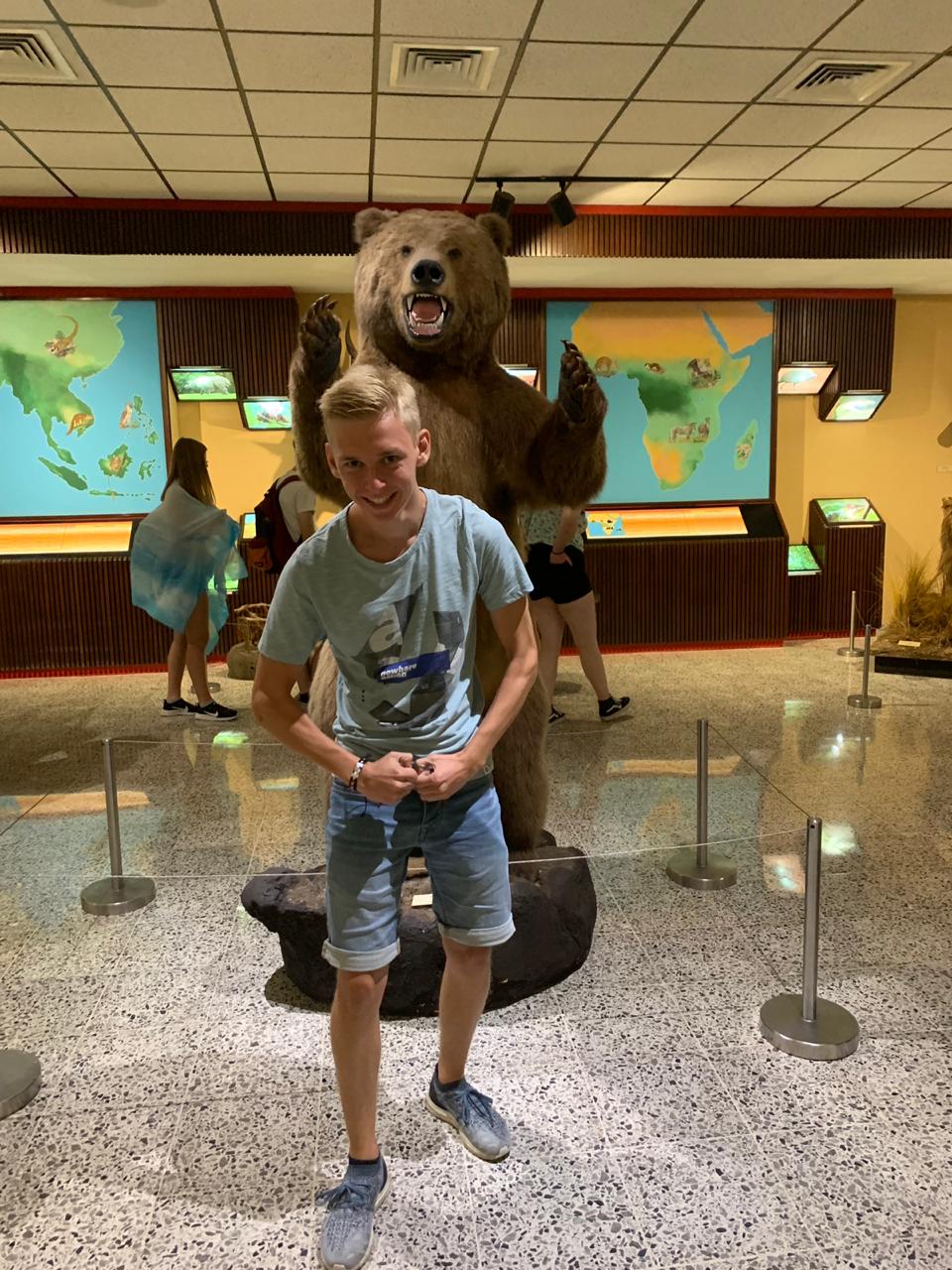
Our day started with the meeting at 8 am at the Cooperativa, from there we took a bus to our first activity on that day: The Natural Historic Museum of Santo Domingo. At the museum we went to the differents floors: the 1st floor showed different animals of the ocean, such like whales. After that was finished , we went to the planetarium of the museum. This was the only one in the Dominican Republic and was supported by Japan. The film that was played during the show was in spanish so sadly we couldn´t understand everything. Then after Anne translated what she remembered, we went to see another film. The other film was about, how the world was created and what livings was there before us. On the last floor were some taxidermied animals, but also a living spider and living snakes. Then our tour was finished and we get into the bus.

Our second activity that day was in the old town of Santo Domingo. We visited the „Zona Colonial“, the „Plaza de la Cultura“ and the House of Diego Colon, the son of Cristobal Colon. In the house of Diego Colon we had a guided tour by a german speaking guide. After we left the house we went to get to the bus but it wasn‘t at the meeting point so we ended up in the Chocolate museum and the museum of urban art. Then our bus arrived and drove us back to the cooperativa.

13/08 – Upcycling

We met at 10:00 am at the COOPERATIVA HERRERA and researched creative ideas to make something new out of unused plastic bottles. After a while, everyone had a plan and our work began. All of us put a lot of effort into the work. Even if we have a lot of chaos with the materials that we needed, we all had much fun and out of bottles, we made decorations, vases, candle holders, lamps and beautiful painted flowers.

At the end of the day, we had lunch, had fun taking photos of all the upcycling we did. Also, when we finished, we talked about the experiences of upcycling and tried to do a little reflection of the day.

12/08 – cocoa plantation, ruins and plastic jogging

The next item on the agenda for us was the visit of the cocoa plantation on the experimental and agricultural area of the university. Here we learned a lot about the cultivation, growth, hybridisation and export of cocoa beans.

After that we visited some old ruins which used to be a palace of a tradesman family who produced and exported sugar. Finally we had some delicious lunch at the university and a reflection round. At the end of the day we did some plastic jogging near the ruins in some streets and returned to the COOPERATIVA.

To sum up, we would say that it was a very strenuous an effortful day on the one hand but on the other hand we had much fun with group, learned a lot and were happy about the opportunity to see many places in Santo Domingo.

final note: we took a lot of pictures on that day! 🙂

12/08 – course about Micro-Plastic

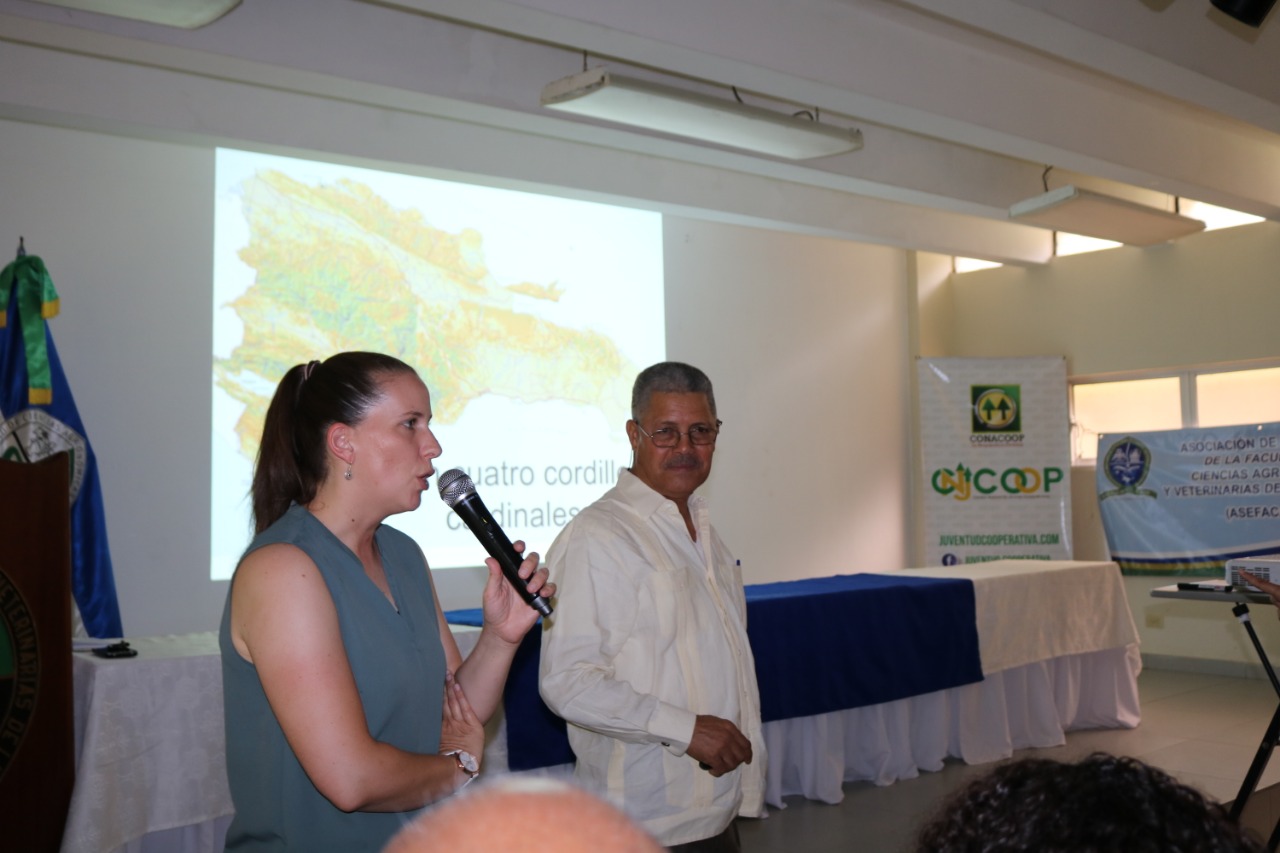
On our second day we went to the university of agricultural science and veterinary medicine (UASD). Primarily we got welcomed by the professors of the university who were very interested in the topic of plastic waste and of course in our project.

We heard a very interesting presentation of the professor of biology Luis Carvajal which was about micro-/ nano plastic and its consequences. The first part of the presentation was about the country of the Dominican Republic in general which was really helpful for the Germans to learn more about the geography of the country. In the second part of his presentation he talked about nano plastics and the reasons why it is that dangerous for the environment and for us. He mentioned some basic facts about the plastic as chemical material. We found out that you usually categorise plastic into three different grades of hardness because of the molecularly structure and the classification of plastic in a chart where each number from one to seven stands for a special gradation of plastic. Moreover he informed us that plastic is a resource that can’t associate with the nature in any way so that it will never dissolve itself, because of this reason it is even possible that we breathe in micro-/ nano plastic.

10/08 – Welcome in Santo Domingo

The first day we arrived at the Cooperativa. Everyone was really nervous as we got together for the first time. At that time Anne Schulte told us to get into a circle and introduce ourperson so we could got to know each other more.

After that we started playing in order to have some fun and learn more about the thoughts the others have about the plastic and our environment in general. The game was really fun and we learned a lot about the differences when it comes to recycling in our  countries.

Afterwards we had lunch which was the first time our germans friends tried dominican food. They find it atypical but good, the diversity wasn’t to big just the condiments were kind of „strong“. The good part was that we both enjoyed the food.

In the afternoon all of us went to Mirador Sur which is a popular park in the Dominican Republic. We took some photos and had a look around. Sadly we did not have more time to explore the park as there were more activities. We went to the Centro Nelda E. Valpiana to an official welcome. Lots of speeches were held and everyone got to introduce themselves to the public. Again we took some photos and had cake.

At the end of the day we felt like a part of the family as everyone was really friendly and they seemed to be so happy about the exchange program.

Zero Waste Shopping

At the second preparation meeting we cooked the dominican dish „Moro“ and „Natillas de vainilla“. Therefore we had the task to buy the needed ingredients with a minimum of waste.

Our first choice was the farm shop „Mertens Wiesbrock“, around 7km away from the center of our town Verl. We packed some bags and reusable boxes and went there by bike.

Most of the fresh vegetables and fruits in this shop are locally grown and sold without extra packaging. Even rice we got unpackaged out of a filling station directly into our selft brought boxes. Alternatively you can get returnable boxes from the shop.

Afterwards we went to the Edeka supermarket directly in the center of Verl. There we bought mincemeat from the meat counter, where it is also possible to bring your own reusable boxes.

Conclusion: Zero waste shopping was possible for us for most of the ingredients on our shopping list. Only the coconut flakes were packed in a non-refillable plastic packaging. And the coconut milk was poured in a non-refillable metal can.

Experts on zero waste shopping may even eliminate these packaging by buying whole coconuts and extracting the coconut milk and meat 😉

First meeting of the German group

Our first meeting im May served as an opportunity to get to know each other and to discuss information about the project as well as handing out a brochure about the Dominican Republic.

We started off by sharing our information since some participants were late. We talked about necessary vaccinations, our questions as well as manners that are not common in Europe.

Afterwards we formed an inner and an outer circle and asked the person in front of us the following questions for 4 minutes:

1. Why do you want to participate in this project?

2. Are you using the pictured objects at home? (2 pictures had been handed out to each person. Some objects were more eco-friendly than the others and the participants discussed if and why they use them at home)

3. Personal information: age, hobbies, languages you can speak etc.

After summarizing similarities together, we filled out 2 question sheets about the topic sustainability and compared our answers with each other. The question sheets are used to record our knowledge and to determine whether the method was efficient at the end of the project.

Lastly, organizational matters were discussed, and some people were appointed to shop food in a sustainable way and avoiding to buy food wrapped up in plastic for the next meeting to cook a dominican plate. Some participants were asekd to write the report and a summary of a dominican newspaper article about recycling.

„Kommt mir nicht in die Tüte!“ – Wir tragen heute Verantwortung für unser Morgen! /¿Bolsa de plástico? ¡De eso ni hablar! ¡Asumimos la reponsabilidad hoy para nuestro mañana!“

In unserem Projekt „“Kommt mir nicht in die Tüte!“ kommen Jugendliche aus Deutschland und der Dominikanischen Republik zusammen um gemeinsam zum Thema Nachhaltigkeit und Umweltschutz zu arbeiten. Die Jugendlichen beschäftigen sich während des Projektes mit den Auswirkungen von unachtsamem Konsum auf unsere Tier- und Pflanzenwelt. Ganz besonders beschäftigen wir uns in dem Projekt mit dem aktuellen Thema des Plastikmülls und werden Aktionen zur Säuberung der Strände sowie Kampagnen zur Aufklärung starten.

Young people from Germany and the Dominican Republic come together to work in Teams on the topic of sustainability and environmental protection in our project „Kommt mir nicht in die Tüte!“ – Wir tragen heute Verantwortung für unser Morgen! /¿Bolsa de plástico? ¡De eso ni hablar! ¡Asumimos la reponsabilidad hoy para nuestro mañana!“. During this project the young People will deal with the effects of inattentive consumption on our environment, animals etc. During the project we will deal especially with the current topic of plastic garbage and will launch actions to clean up the beaches as well as educational campaigns.

Dieses Projekt wird gefördert von Engagement Global gGmbH im Auftrag des BMZ im Rahmen von weltwärts

Die Beiträge in diesem Blog werden von den Teilnehmerinnen und Teilnehmern des Projektes sowie vom Jugendaustauschwerk im Kreis Gütersloh e.V. erstellt. Sie sind als Herausgeber für den Inhalt allein verantwortlich und er spiegelt nicht die Ansichten des BMZ wider.